Nashville Home Gets a Full Sound Control Treatment
Most soundproofing jobs fail because they stop at one layer. Add some insulation, throw up drywall, call it done. The problem is that sound doesn't just travel through air - it travels through the structure of the building itself. So if you don't break that connection, you're just guessing.
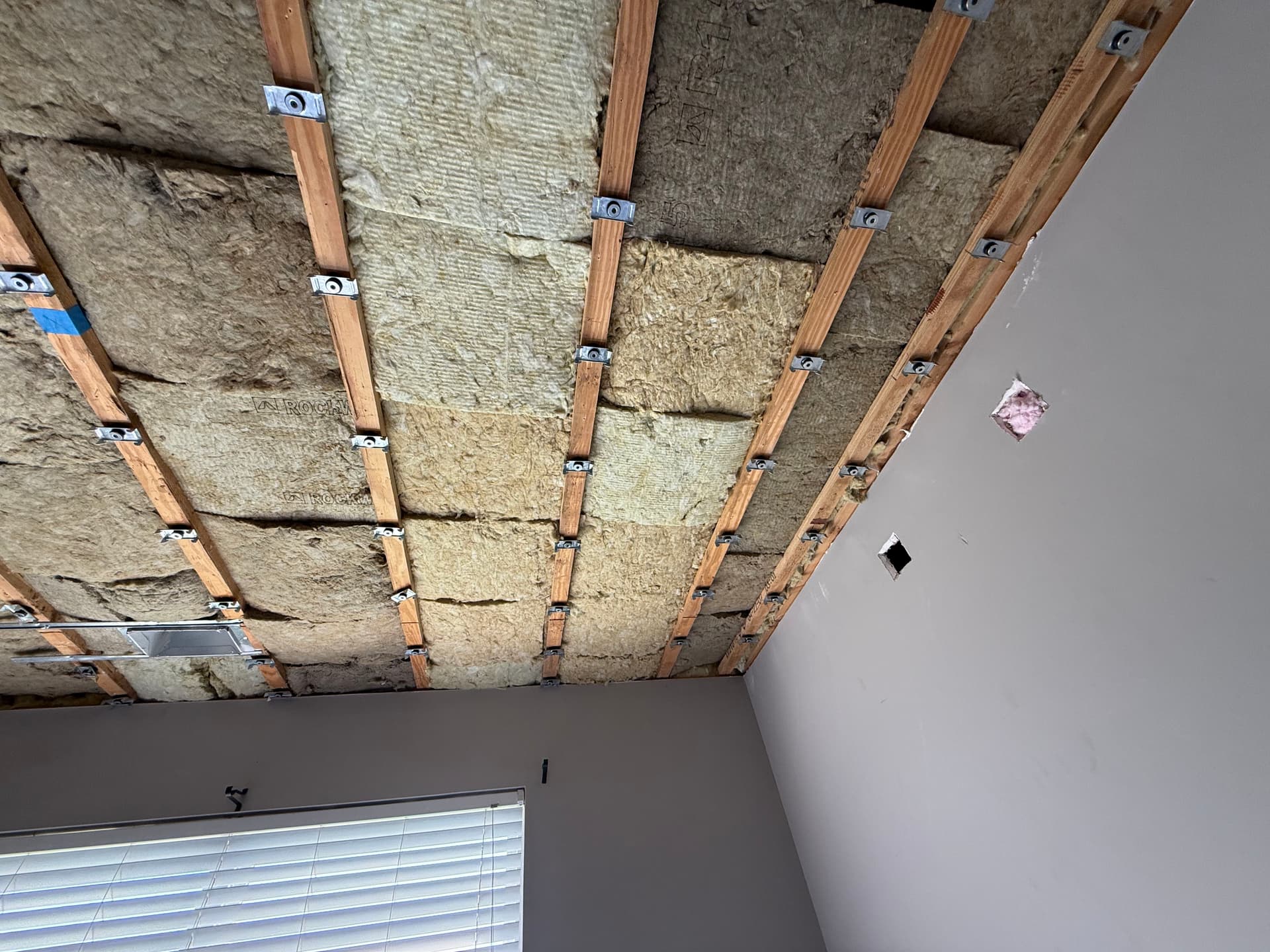
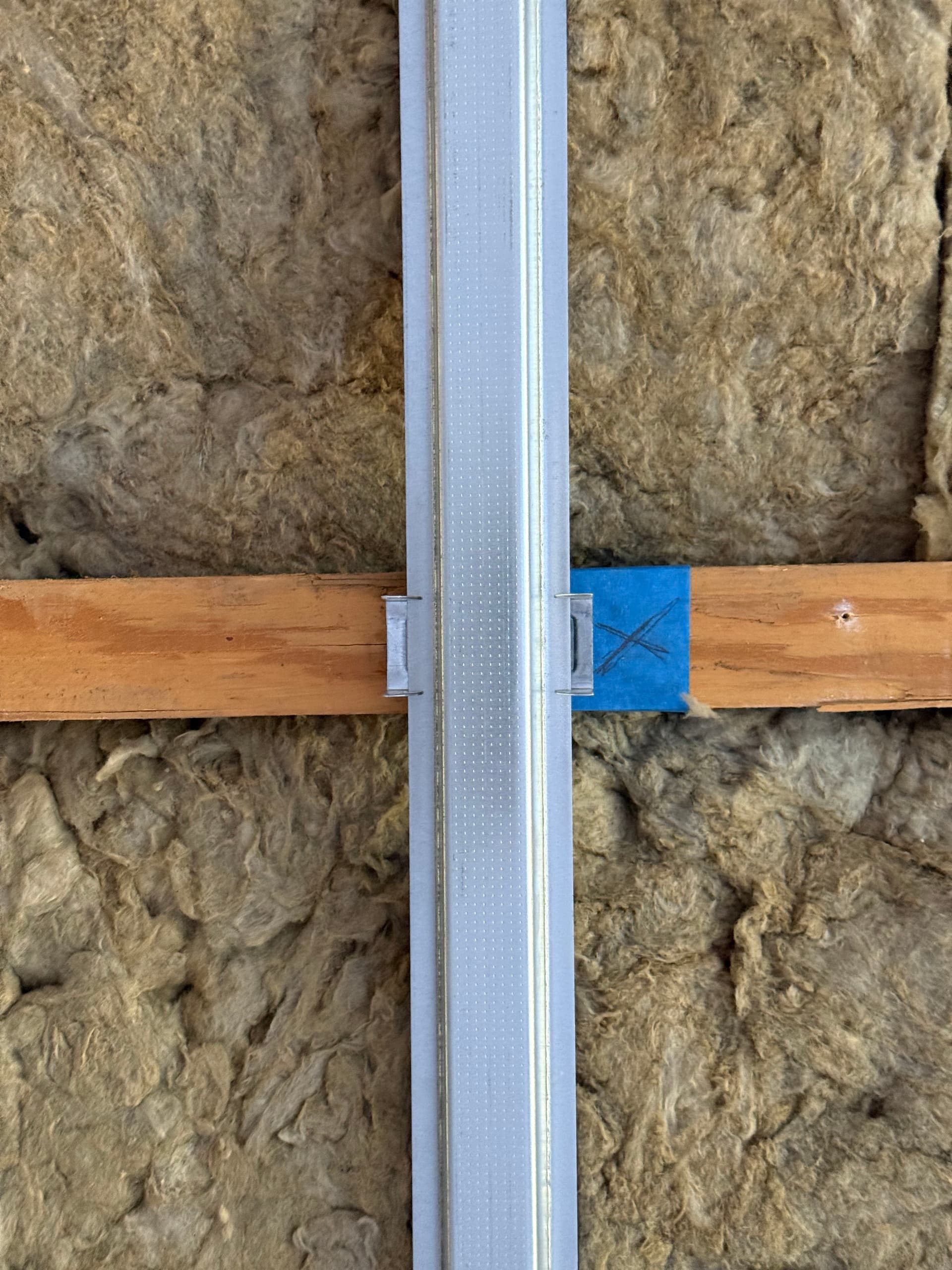
Here's what we were working with on this one. We started with isolation clips mounted directly to the ceiling joists. Those clips hold the hat channel, which is the metal track the drywall eventually attaches to. That gap between the structure and the finished surface is everything. It's what keeps vibration from transferring straight through.
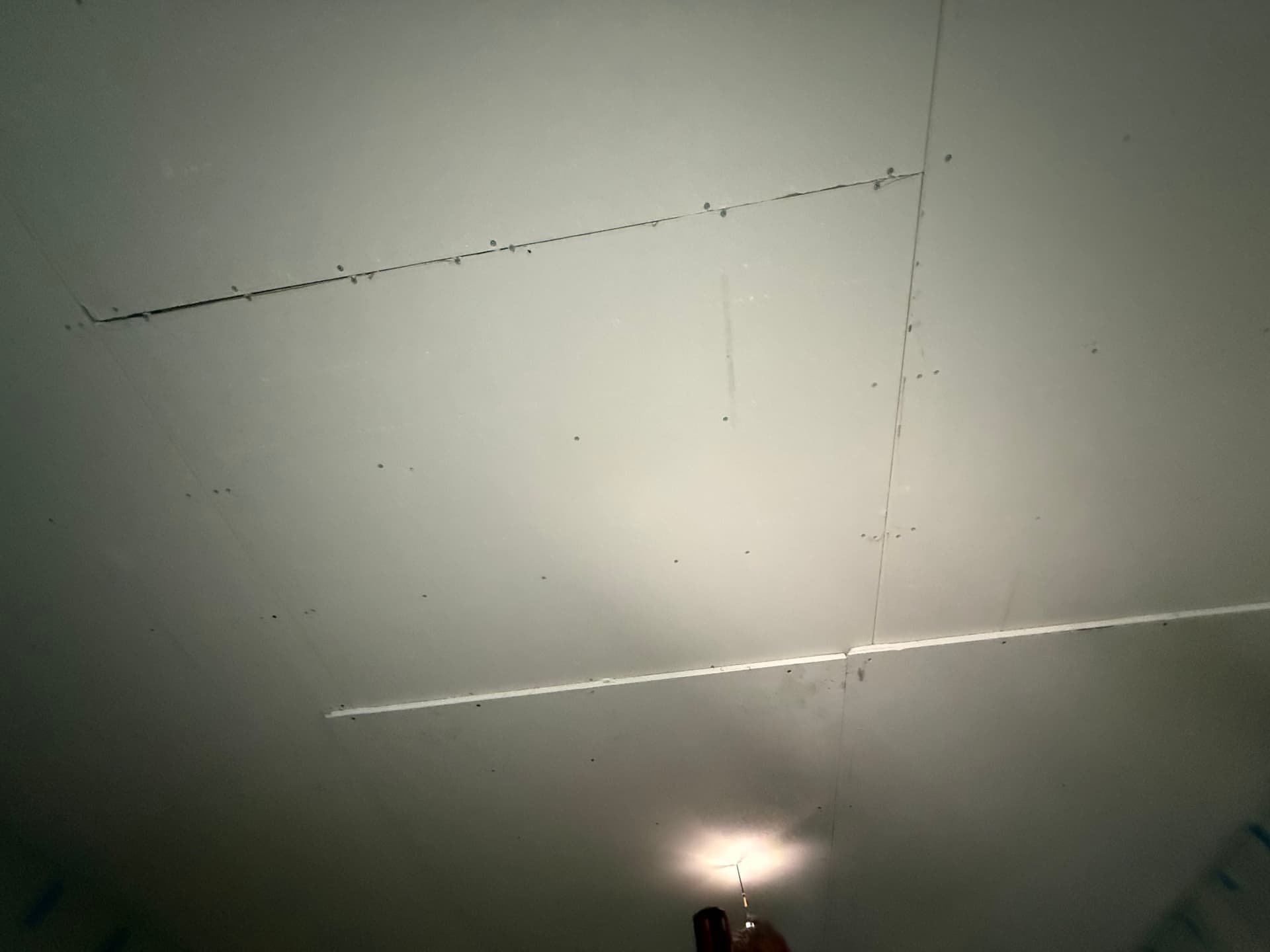
From there, we packed the joist bays with rock wool insulation - dense, heavy, and built specifically for sound absorption. Then came the drywall stack: 5/8 inch drywall first, followed by a layer of Green glue noise-reducing compound, and then 5/8 inch QuietRock on top of that. Green glue works by converting sound energy into a tiny amount of heat as it moves through the two layers. It sounds simple, but the performance difference is real.
The final step was sealing every seam with acoustical caulk. This part matters more than most people realize. A gap the width of a pencil can compromise the entire system. We don't skip it. Once everything is closed up, you've got a ceiling that looks completely normal - but performs at a completely different level.
What you end up with is a space that's quieter, more comfortable, and more private. No mechanical hums bleeding through from above, no footsteps, no conversations carrying where they shouldn't. It's the kind of work you stop noticing after a few days - because you stop being bothered.